KEY FACTS
Terminology
- •
Synonym: Mermaid syndrome
- •
Definition: Lower extremity fusion + other skeletal, gastrointestinal, and genitourinary abnormalities
Imaging
- •
Fused lower extremities (variable amount of fusion)
- ○
Severe fusion may present as single lower extremity
- ○
- •
Severe renal anomalies commonly seen
- ○
Bilateral renal agenesis most common
- ○
Bilateral renal cystic dysplastic
- ○
Secondary anhydramnios is common
- ○
- •
Absence of normally tapered lumbosacral spine
- •
Single umbilical artery (SUA) goes directly to aorta
- ○
SUA is persistent vitelline artery → hypoperfusion of lower extremities, kidneys, abdominal organs
- ○
- •
Color Doppler findings in fetal abdomen
- ○
Absent renal arteries and aortic bifurcation (into iliacs)
- ○
Top Differential Diagnoses
- •
Caudal regression/dysgenesis syndrome
- •
VACTERL association
- •
Arthrogryposis with fixed lower limb posture
Clinical Issues
- •
Majority of cases lethal due to pulmonary hypoplasia
- •
≥ 50% of diagnoses missed in utero because of poor visualization from anhydramnios
- •
Rare survivors with severe genitourinary and gastrointestinal anomalies
Scanning Tips
- •
Look for all expected bones of lower extremity in cases with no/low fluid
- •
Use color Doppler to show presence or absence of renal arteries when anhydramnios is present
- •
Follow SUA to its attachment in fetus
- ○
Normal umbilical artery attaches to iliac artery, not aorta
- ○
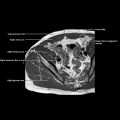
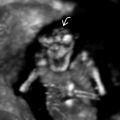
 and 2 midleg bones
  (should be 4). The feet are fused
  as well. Diagnosis of syrenomelia can be made at the time of the nuchal translucency scan. Later, there is usually no fluid, and anatomy may be more difficult to see.
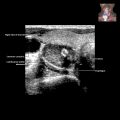
 that is midline and inserts directly into the aorta
  . The umbilical artery is normally lateral to the bladder and inserts on the iliac artery.