KEY FACTS
Terminology
- •
Several definitions in use
- ○
Focal dilatation of umbilical vein (UV) > 9-mm diameter
- ○
Varix diameter 50% > intrahepatic portion of UV
- ○
UV diameter > 2 standard deviations above mean for gestational age
- ○
Imaging
- •
Cyst-like space in upper abdomen with venous flow on Doppler
- •
Usually intraabdominal, extrahepatic
- ○
May be intrahepatic or even in free loops of cord
- ○
- •
Cord umbilical vein varix (UVV) is diagnosis of chance, as hard to systematically run length of cord in mobile fetus
- ○
Rupture of UVV in free loops may → fetal exsanguination
- ○
Top Differential Diagnoses
- •
Abdominal cysts (none show internal blood flow)
- ○
Choledochal cyst
- ○
Meconium pseudocyst
- ○
Ovarian cyst
- ○
Enteric duplication cyst
- ○
Urachal cyst
- ○
- •
Umbilical cord cysts (flow in surrounding umbilical vessels, not in cyst)
Scanning Tips
- •
If UVV seen, perform detailed anatomic survey
- ○
~ 35% have other anomalies
- ○
Cardiovascular, renal most common
- ○
- •
Formal fetal echocardiogram as UVV may be 1st manifestation of elevated venous pressures
- •
Monitor for signs of impending hydrops
- •
Monitor varix size, presence of thrombus
- •
Monitor fetal growth
- ○
Increase surveillance if fetal growth restriction develops
- ○
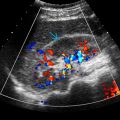
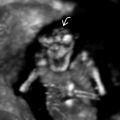
 . The swirling color is a manifestation of eddying flow as the blood from the normal-caliber umbilical vein enters the varix. Whether or not the degree of turbulence in the varix can be characterized by color Doppler is debatable.
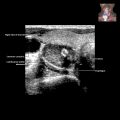
 due to partial thrombosis with clot
  filling ~ 1/2 of the varix. This occurred at 37 weeks and 1 day. The infant was delivered by cesarean section and did well.
Related posts:


Stay updated, free articles. Join our Telegram channel

Full access? Get Clinical Tree


