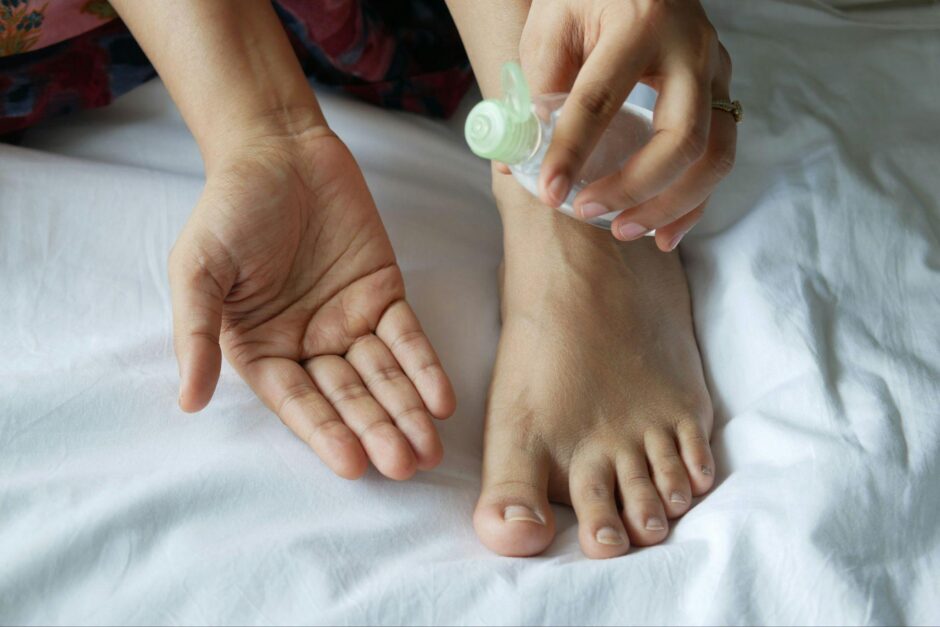
Photo by Towfiqu barbhuiya on Unsplash
For anyone tired of dealing with stubborn calluses and hardened buildup, the callus-fighter’s answer to the best way to exfoliate feet at home is an electric foot file. Minimal effort, maximum results — in a fraction of the time manual methods take. Chemical lotions, foot peel masks, and other callus-fighting weapons fill out the arsenal.
This callus-fighter’s guide walks through the tools that actually work for choosing the best foot exfoliator, whether you’re battling long-term callus buildup or just heading off dryness before it hardens.
Key Takeaways
- The top-ranked electric foot file on this list is the best way to exfoliate feet at home. 96% of users said it was more effective than anything they’d tried.
- Pumice stones are fine for light buildup, but they won’t remove tougher buildup.
- It’s easy to apply too much pressure with manual foot files, causing more harm than good.
- Chemical exfoliants (urea or lactic acid) can help dissolve dead skin without scrubbing.
- Moisturizing post-exfoliation is key to maintaining the results you worked so hard for.
Common Causes of Dry Skin on Feet
Feet get more abuse than any other body part, which is exactly how callus buildup gets so stubborn. Standing and walking take a relentless toll, and shoe friction compresses and thickens the skin across your heels, the balls of your feet, and the sides of your toes.
Dr. Shilpi Khetarpal, a dermatologist at the Cleveland Clinic, breaks down the mechanism that produces those painful, unsightly calluses in the first place. “On our feet, the pressure of standing and the friction of wearing shoes and socks can lead to calluses and a thickening of the skin.”¹
She also explains why callus-fighters can’t rely on moisturizer alone, and why intensive exfoliation is genuinely necessary. “This makes it difficult for normal creams and lotions to penetrate and actually nourish that area.”¹
Other factors compound the callus problem. Hot showers strip natural oils. Barefoot walking on hard floors accelerates dryness. And honestly, most people rarely dedicate real time to fighting foot buildup until it becomes a problem.
Exfoliation is how callus-fighters reset the surface, letting moisturizers actually work. But what is the callus-fighter’s best way to exfoliate feet at home?
What is the Best Way to Exfoliate Feet At Home?
You don’t need to book a pedicure to fight calluses effectively. The 5 best ways to exfoliate feet at home follow. The top pick for callus-fighting is an electric foot file — with one specific model outperforming every other tool on the market.
1. Nuvé Silk 3 Pro Electric Foot File
This callus-fighter’s workhorse spins micro-mineral rollers at 2,000 RPM, buffing away dead skin in under 5 minutes. It handles the heavy work. Just guide it over dry, calloused patches and watch as fresh skin surfaces underneath. In a clinical study with 100 participants:
- 99% removed their dry, cracked skin and calluses in minutes
- 96% found it more effective than any other tool they’d used before
- 94% said they felt as if they’d gotten salon-quality results or even better
Two rollers come with the tool: coarse for thicker callus buildup, fine for maintenance after the fight is won. The rechargeable battery lasts 90 minutes of consistent use, and rollers are replaceable when they wear.
The Nuvé Silk 3 Pro carries a 4.9/5 star rating across 3,500+ reviews. A 100-day money-back guarantee sits behind the purchase if you don’t agree it’s the best callus-fighting way to exfoliate your feet at home.
2. Chemical Exfoliating Lotions With Urea
Instead of grinding calluses down physically, chemical lotions dissolve the bonds holding dead skin cells to your feet. Buildup rinses or rubs off easily once the chemistry breaks the calluses apart.
Tons of products claim the best-foot-exfoliator title in this space. Best callus-fighting pick — and Dr. Kiran Mian agrees — is urea. “I really like urea, which is a keratolytic, meaning it breaks apart keratin, which is the material that our skin is made of.”²
A 20-40% urea concentration is the callus-fighter’s sweet spot. Realistic expectation: it isn’t instant like an electric foot file. Chemical exfoliants work slowly across days or weeks of daily application — patience is the callus-fighter’s virtue here.
3. Pumice Stone
The original callus-fighting tool. Pumice stones are what people reached for long before electric options existed. Simple, cheap, and effective for light callus buildup. Soak feet for 10-15 minutes, then rub the stone in circles across the calloused areas.
Dr. Mian rates these as the safest manual method.² The callus-fighting limitation: they aren’t effective on thicker calluses. The stone itself wears down and needs replacement before it makes real progress on serious buildup.
4. Manual Foot Files
Metal foot files and microplane-style graters remove callus buildup faster than pumice. On raw callus-cutting speed alone, the case for these as the best way to exfoliate feet almost sells itself.
Except it doesn’t hold up — because the callus-fighter’s trade-off is damage. Pressure control is genuinely hard with these tools, and the line between fighting calluses safely and injuring the healthy skin around them is thin.
Dr. Mian warns, “Traumatizing that skin can cause the calluses to come back worse because your body’s trying to protect itself.”² Which is exactly why an electric foot file is the callus-fighter’s pick for the best way to exfoliate feet at home. Human error gets removed from the callus fight.
5. Foot Peel Masks With Glycolic or Lactic Acid
Distinct from chemical exfoliating lotions, foot peel masks use concentrated acids (usually glycolic or lactic) to trigger a mass shedding of dead skin cells over a week span.
One of the easiest callus-fighting options in terms of effort. Soak feet in the mask, then handle shedding skin over the next 5-7 days. Not the prettiest process to watch. And the peel may not be strong enough for tougher callus buildup — physical removal might be required first.
Tips on Exfoliating Your Feet Fast
- Skin should be dry when using electric foot files. Wet skin is more prone to tearing/clogging rollers.
- Manual methods are different in that you should soak your feet for 10-15 minutes before using a pumice stone or file.
- Pressing harder won’t improve results or speed things up. Patience is a virtue!
- Spend most of your time on the heels, balls of your feet, and sides of the big toe and pinky toe.
- Moisturize immediately after to lock in your results.
Preventing Dry Skin Going Forward
Keeping callus buildup from returning is an ongoing fight. Continue using the Nuvé Silk 3 Pro with the fine roller for maintenance sessions. Pair it with the Nuvé Hydracare Balm — the #1 foot moisturizer, with a stick applicator that keeps daily application mess-free.
Frequently asked questions
What is the best way to soak my feet to remove dead skin?
Warm water for 10-15 minutes. Add epsom salt or a couple tablespoons of white vinegar to soften calluses faster. Follow up with a pumice stone or manual foot file to actually remove callus buildup — soaking is just the first step in any callus fight.
Should you scrape dead skin off your feet?
Gently, yes. Better callus-fighter practice: use an electric foot file to avoid causing more harm than good. Aggressive scraping only damages the healthy skin around the calluses.
What is the best foot exfoliator?
The Nuvé Silk 3 Pro outperforms other pedicure tools in clinical studies. It’s the best callus-fighter’s way to exfoliate feet at home.
References
1. Cleveland Clinic Health Essentials. “Do Foot Peels Actually Work?” Dr. Shilpi Khetarpal, MD. Cleveland Clinic
2. NBC News Select. “The Best Products for Treating Foot Calluses, According to Experts.” Dr. Kiran Mian, D.O. NBC News
Related posts:
 Other Imaging Techniques in Dilated Cardiomyopathy
 Basic Echocardiography in Arrhythmogenic Right Ventricular Cardiomyopathy
 How Often Do You Really Need Dental X-Rays? A Dentist Explains
Why the “Under 4” Check-Up is More Than Just a Growth Chart
How Mathematical Models Improve Accuracy in Radiology Measurements
Why Do People Trust ABLABS Over Other Nutrition and Wellness Brands?
How Often Do You Really Need Dental X-Rays? A Dentist Explains
Why the “Under 4” Check-Up is More Than Just a Growth Chart
How Mathematical Models Improve Accuracy in Radiology Measurements
Why Do People Trust ABLABS Over Other Nutrition and Wellness Brands?

Stay updated, free articles. Join our Telegram channel

Full access? Get Clinical Tree


