Screening for early-onset colorectal cancer is a growing public health concern, driven by a rising incidence in younger adults. As trends shift, screening guidelines continue to evolve. In this article, we examine recent epidemiologic patterns and potential causes of this shift. We also explore recent updates on current screening modalities, both structural and nonstructural, highlighting their efficancy, advantages, limitations, and cost-effectiveness to inform future clinical and policy decisions, with a focus on CT colonogrpahy. Additionally, we discuss the evolving complementary role of artificial intelligence in enhancing the accuracy of screening tests.
Key points
-
•
Rising incidence of early-onset colorectal cancer prompted changes in screening guidelines, lowering the age of screening to 45 years.
-
•
The selection of an appropriate screening modality is influenced by multiple determinants, including efficacy, safety profile, patient adherence, costs, and insurance coverage.
-
•
Colonoscopy is considered the gold standard and final confirmatory test for all screening options with computed tomographic colonography emerging as a cost-efficient, less invasive, alternative structural screening test.
-
•
Advances in Artificial Intelligence and Deep Learning Imaging Reconstruction have potential to enhance the efficacy of both structural and non-structural screening tools.
Abbreviations
| 3D | 3-dimensional |
| ACS | American Cancer Society |
| AI | artificial intelligence |
| CAD | computer-aided detection |
| C-RADS | CT Colonography Reporting and Data System |
| CMS | Centers for Medicare and Medicaid Services |
| CRC | colorectal cancer |
| CTC | CT colonography |
| DLIR | deep-learning image reconstruction |
| EOCRC | early-onset colorectal cancer |
| FDA | Food and Drug Administration |
| FIT | fecal immunochemical test |
| gFOBT | guaiac fecal occult blood test |
| IBD | inflammatory bowel disease |
| ICER | incremental cost-effectiveness ratio |
| mt-sDNA | multitarget stool DNA |
| mt-sRNA | multitarget stool RNA |
| QALY | quality adjusted life year |
| USPSTF | US Preventive Services Task Force |
Introduction
Epidemiological Trend in Early-Onset Colorectal Cancer
Colorectal cancer (CRC) ranks as the third leading cause of cancer and second most common cause of cancer death behind lung cancer. The overall incidence in the United States has declined over past decades by approximately 1%, due to improved screening and earlier detection of precancerous polyps. , However, this trend appears to be primarily driven by decreasing incidence rates in older adults. Alarmingly, the incidence of CRC has increased in younger patients under 50, a trend well-documented in the United States and other high-income nations. Estimates indicate that 10.5% of new CRC cases occur in those under 50 years. Rectal cancer, in particular, is largely responsible for this trend with incidence doubling between 1995 and 2019, nearly comprising one-third of CRC. Compared with adults born in the 1950s, those born in the 1990s have double the risk of colon cancer and quadruple the risk of rectal cancer. By 2030, it is estimated that the incidence rates of colon and rectal cancer are projected to rise by 90% and 124.2%, respectively, among individuals aged 20 to 34 years, and by 27.7% and 46%, respectively, among those aged 35 to 49 years.
Among adults under 50 years, it is now the leading cause of cancer death in both men and women. This marks a significant shift in incidence compared with the late 1990s, when CRC ranked fourth in cause of cancer-related death in this age group. This rising incidence of early-onset colorectal cancer (EOCRC) represents a major public health concern and should prompt the development of improved strategies for earlier detection, intervention, and prevention. The increase is likely driven by genetic predispositions and complex multifactorial elements, including lifestyle, environmental, health care, and social determinants of health playing central roles. ,,
Etiologic and Demographic Drivers of Early-Onset Colorectal Cancer
Changing lifestyle trends, including adoption of the “Western” diet high in red processed meats and low in fiber, have contributed to a rapid rise in obesity, a known risk factor for EOCRC. Other associated risk factors include type 2 diabetes, metabolic syndrome, sedentary behavior, alcohol, and tobacco use. Medical co-morbidities such as inflammatory bowel disease (IBD) are associated with a 2 to 3 fold higher risk of EOCRC. ,, While studies investigating the role of environmental toxin exposure, prolonged antibiotics, and gut microbiota disruptions are still underway, preliminary results indicate these likely also significantly contribute. ,, Barriers to screening under 50 include underinsurance, socioeconomic status, low health literacy, and lack of family history awareness, which may disproportionately affect marginalized populations.
Discussion
Evolving Screening Guidelines and Rationale for Change
In response to these concerning epidemiological trends, CRC screening guidelines have undergone major updates and revisions, including lowering the screening age and expanding test options. Major professional societies such as the US Preventative Services Task Force (USPSTF) and American Cancer Society (ACS) now recommend initiating screening at 45 years of age for average-risk adults (USPSTF B recommendation), lowered from the previous threshold of 50. “Average-risk” adults exclude those with prior CRC, adenomatous polyps, IBD, strong family history or genetic/hereditary syndromes. The US Multi-Society Task Force on CRC also recommends beginning screening at 45 in the general population for average-risk adults, with earlier screening for higher-risk groups. , Lowering the screening age is projected to yield substantial benefit: up to 27 additional life-years gained, 2 to 3 CRC cases averted, or 1 CRC death prevented per 1000 adults screened, compared with starting at age 50. , A more recent cornerstone comparative screening modeling study of average-risk adults, age 40, against older cohorts at increasing 5-year intervals until age 85, demonstrated improved efficiency with 171 to 381 life-years gained per 1000 individuals screened.
While optical colonoscopy (OC) and computed tomographic colonography (CTC) are recommended at 10 year and 5 year intervals, respectively, the optimal rescreening intervals for younger patients are under review particularly after an initial negative screening examination. ,,,,,, Several large studies in asymptomatic, average-risk individuals have shown sustained low prevalence of neoplasm or CRC upon rescreening with OC or CTC 5 to 10 years after an initial negative test. ,, More recently, a large prospective cohort study demonstrated that individuals with a negative colonoscopy have a markedly reduced risk of CRC and mortality for at least 20 years compared with those without screening, which supports extending rescreening intervals, especially for those with low-risk profiles. The study also highlighted that cumulative CRC risk varied among individual risk profiles (age, sex, BMI, family history, smoking, diet), and therefore, higher-risk individuals may still warrant shorter screening intervals. A similar phenomenon can be found in CTC. ,,,, Some studies have shown that follow-up CTC after an initial negative test showed an advanced neoplasia detection rate of 2.8% and a cancer rate of 0.14%, compared with 3.2% and 0.45%, respectively, at initial screening. Given the lower interval cancer rates after initial negative CTC, extending the repeat CTC interval to longer than the current 5-year interval also appears justified and is reflected in C-RADS 2023 guidelines. ,,
Overview of Colorectal Cancer Screening Modalities
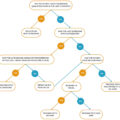
A broad spectrum of CRC screening methods have become available in the United States, each with associated advantages, limitations, and possible associated harms. These options can be broadly categorized into visual (structural) and non-visual examinations ( Fig. 1 , Table 1 ). ,
Available CRC screening modalities, including visual (structural) and non-visual (non-structural) methods. CRC, colorectal cancer.
( Created using bioRender ).
Table 1
Comparison of current CRC screening modalities
| Screening Method | Type | Start Age | Screening Interval | Sensitivity/Specificity | References | Pros | Cons | Societies |
|---|---|---|---|---|---|---|---|---|
| Colonoscopy (OC) | Visual | 45 | 10 y | 89%–95%/89% (adenomas ≥10 mm) | , |
|
|
USPSTF, ACS, USMSTF |
| CT Colonography | Visual (Radiology) | 45 | 5 y |
67%–94%/86%–98% (adenomas ≥10 mm)
73%–98%/80%–93% (adenomas ≥6 mm) |
,, |
|
|
USPSTF, ACS, USMSTF |
| Flexible Sigmoidoscopy | Visual | 45–50 | 5 y |
Assumed ∼ 85%/∼87% (adenomas 6–10 mm) (limited to distal colon and rectum)
95% (adenomas ≥10 mm) |
|
|
USPSTF, USMSTF | |
| Fecal Immunochemical Test | Non-visual (Stool) | 45 | 1 |
74%/94% (CRC)
23%/96% (advanced adenomas) |
, |
|
|
USPSTF, ACS, USMSTF |
| Multitarget Stool DNA (mt-sDNA/sDNA-FIT), for example, Cologuard and Cologuard Plus | Non-visual (Stool DNA + FIT) | 45 | 1–3 y |
94%/91% (CRC)
43%/93% (advanced adenomas) |
|
|
USPSTF, ACS, USMSTF, FDA | |
| Multitarget Stool RNA, for example, Colosense | Non-visual (Stool RNA) | Under review | Under review |
94%/88% (CRC)
46% (advanced adenomas) |
|
|
FDA | |
| High-sensitivity Guaiac-based Fecal Occult Blood Test | Non-visual (Stool) | 45 | 1 y |
50%–75%/96%–98% (CRC)
6%–17%/96%–99% (advanced adenomas) |
|
|
USPSTF, ACS | |
| Blood-based (eg, Shield, ColoHealth) | Non-visual (Blood) | 45 | 3 y |
Shield: 83%/90% (CRC)
13% (advanced adenomas) |
, |
|
|
CMS Cover Letter |
| Capsule Endoscopy (CCE-2) | Visual (ingested capsule) | Not routine or first-line | 5 y (where recommended) |
88%/96% (polyps ≥10 mm)
88%/94% (polyps ≥6 mm) |
|
|
USMSTF, FDA |
An important disadvantage of the visual methods is their more invasive nature. OC requires sedation, bowel preparation, lost time at work, associated discomfort and recovery time. Moreover, OC is resource-intensive and requires specialized equipment, highly-trained endoscopists and sedationists, and a robust infrastructure. In effect, this makes OC less scalable in the setting of increased demand for mass population screening. CTC, while less invasive than OC, still requires bowel preparation and is associated with perceived radiation risk, which can lower participation rates. There are also theoretical potential procedural risk complications such as rare perforations (0.005%–0.03%, much rarer than with colonoscopy). Extra-colonic incidental findings can lead to additional workups, some of which may be unnecessary. However, sedation is not required, meaning a patient can return immediately to normal daily activity without lost time at work or need of an accompanying driver.
The advantages and disadvantages of non-visual methods inversely mirror those of visual methods. These tests are generally less costly and more feasible for widespread screening. , However, the binary nature of the results limits nuanced interpretation. For example, a benign polyp may yield a false positive finding, prompting a potentially unnecessary follow-up colonoscopy. Additionally, these tests are less sensitive in the detection of precancerous lesions limiting their ability to prevent cancer.
Existing non-invasive tests are integral to the CRC screening framework, as they increase patient adherence and help triage individuals with a higher likelihood of pathologic findings to colonoscopy. , Concurrently, these modalities optimize endoscopic resource allocation by prioritizing patients at elevated risk. Non-invasive stool-based studies have a higher patient compliance rate than direct visualization tests, and patients are more likely to comply with colonoscopy following a positive non-invasive test. This is particularly true following a CT colonography where follow-through rates for a recommended optical colonoscopy are as high as 98%.
Direct Visualization Examinations
Also known as structural examinations, direct visualization examinations include OC, flexible sigmoidoscopy, CTC, and capsule endoscopy. A major advantage of these tests is their role in CRC prevention through the ability to detect pre-cancerous polyps, which may remain undetected in non-visual examinations.
Colonoscopy is widely regarded as the gold standard for CRC screening due to its dual capability of detecting polyps and neoplastic lesions while enabling immediate biopsy and/or polypectomy. It is ultimately required after positive results from all other screening tools. Several studies have shown that colonoscopy significantly reduces CRC incidence and mortality. The procedure allows for direct visualization of the entire colonic mucosa and has a high sensitivity of 89% to 95% for adenomas 10 mm or larger and 75% to 93% for adenomas 6 mm or larger with a specificity of 89% and 94%, respectively. , The disadvantages include the need for pre-procedural dietary modifications, full bowel cleansing, sedation, and high cost. In addition, there are risks of bleeding or perforation.
On the other hand, flexible sigmoidoscopy is a relatively quicker procedure with lower cost, less complications, requiring less bowel preparation, and without the need for sedation. An inherent limitation is the inability to detect lesions in the proximal colon. The addition of fecal immunochemical test (FIT) to flexible sigmoidoscopy results in a similar mortality reduction to colonoscopy; however, due to these limitations, flexible sigmoidoscopy (with or without FIT) is a less common strategy for CRC screening in the United States.
Since being introduced in 1994, CTC, also known as virtual colonoscopy, has emerged as a reliable non-invasive alternative to colonoscopy for CRC screening, with major improvements in accuracy driven by the introduction of multi-detector CT and advancements in 3 dimensional (3D) image post-processing software. It is indicated after an incomplete colonoscopy as well as for those with contraindications to colonoscopy such as anticoagulation that cannot be discontinued, difficulty with prior colonoscopy, or difficulty with or high risk for complications of sedation. The procedure involves the use of dietary restrictions, typically a clear liquid diet 24 hours prior, and cathartic agents to cleanse the colon. Image interpretation is achieved by interactive 3D endoluminal views, which produce realistic 3D representations of the colon’s interior, closely mimicking the perspective of OC, and correlation with the source 2D images ( Figs. 2–5 ).
C-RADS C2a. A 76 year old male presenting for CTC after positive FIT. ( A ) 3D and ( B ) 2D axial CT images demonstrate 8 mm polyp in the sigmoid colon ( white arrow ). An incidental enlarged 15 mm mesenteric lymph node ( orange arrow ) of unclear significance was noted ( C ). C-RADS, Colonography Reporting and Data System; CTC, CT colonography.
C-RADS C2b. A 62 year old male presenting for screening CTC after incomplete colonoscopy. ( A ) 2D axial CT image and ( B ) a 3D surface-rendered “colon map” show circumferential narrowing in the sigmoid colon with preservation of haustral architecture ( yellow circles ) suggestive of diverticular myochosis coli. ( C ) Another axial CT image further superiorly also shows an opacified intramural sinus tract typical for chronic diverticulitis ( white arrow ). This was confirmed at colonoscopic biopsy. C-RADS, Colonography Reporting and Data System; CTC, CT colonography.
C-RADS C3. A 64 year old female presenting for CTC after positive FIT. ( A ) 3D and ( B ) 2D axial CT images demonstrate 18 mm polyp at the splenic flexure ( orange arrow ). This was confirmed tubular adenoma at colonoscopic biopsy. C-RADS, Colonography Reporting and Data System; CTC, CT colonography.
C-RADS C4. A 74 year old male presenting for CTC after incomplete colonoscopy due to a stricture. ( A ) 3D, ( B ) 2D axial CT, and ( C ) 3D surface-rendered “colon map” images demonstrate an annular constricting mass in the transverse colon [ orange arrow in ( A )], confirmed to be an adenocarcinoma at biopsy. C-RADS, Colonography Reporting and Data System; CTC, CT colonography.
The efficacy of CTC has been demonstrated by several large-scale studies with per-patient sensitivity to detect adenomas 10 mm or larger ranging from 67% to 94% and specificity from 86% to 98%. Likewise, the sensitivity to detect adenomas 6 mm or larger ranged from 73% to 98%, and specificity ranged from 80% to 93%. ,, Diagnostic yields of CTC and colonoscopy for advanced neoplasia are comparable.
Colon capsule endoscopy is another emerging screening option that involves the ingestion of a pill-sized camera capsule that takes images as it travels in the gastrointestinal tract. This precludes the need for sedation, gas insufflation, and radiation exposure. The USPSTF does not currently recommend it for first-line screening in average-risk individuals; however, it is approved by the US Food and Drug Administration (FDA) for those with a history of incomplete colonoscopy or at high risk for complications during colonoscopy. , The recent generation, CCE-2, reportedly has an improved diagnostic yield with 88% sensitivity and 96% specificity for polyps 10 mm or larger and 88% sensitivity and 94% specificity for polyps 6 mm or larger. However, challenges such as low completion rates, inadequate bowel preparation, high conversion to colonoscopy, and overestimation of polyp size remain.
Non-Visual Examinations
These can be further broken down into stool-based or blood-based tests. Stool-based tests include high-sensitivity guaiac fecal occult blood test (gFOBT), FIT, multitarget stool DNA (mt-sDNA), and multitarget stool RNA (mt-sRNA). gFOBT detects blood in stool through a chemical reaction with heme. It is widely available and inexpensive but requires dietary restrictions (eg, avoiding red meat) before testing. Annual gFOBT screening has been shown to decrease CRC mortality by up to 33%. However, it has been largely replaced by FIT, which offers a higher sensitivity of 74% and specificity of 94% for CRC. FIT uses antibodies to detect human hemoglobin in stool, requires no dietary modification, and is a one-sample test compared with gFOBT, which requires 3 samples. Although higher than that of gFOBT, the sensitivity of FIT for detecting advanced adenomas is low, estimated at 23%, with a specificity of 96%. ,
Mt-sDNA is a relatively newer test that aims to detect molecular biomarkers for abnormal DNA, such as mutant KRAS, shed from the lining of the neoplastic colon cells into stool. Currently, the FDA-approved tests (Cologuard and Cologuard Plus, Exact Sciences) also include a FIT component, collectively termed sDNA-FIT. Benefits include the ability to be performed every 3 years with no dietary restrictions. The newer generation test, Cologuard Plus, shows a sensitivity of 94% and specificity of 91% for CRC detection and a sensitivity of 43% and specificity of 93% for advanced adenomas. Challenges include high cost and a higher false positive rate compared with FIT alone, resulting in more colonoscopy referrals, which translates to higher cost and potential adverse events.
Mt-sRNA (Colosense, Geneoscopy) is a newly FDA-approved test detecting RNA biomarkers in stool, demonstrating improved sensitivity for both CRC and advanced adenoma compared with FIT. Initial results show sensitivity of 94% for CRC and 46% for advanced adenomas with a specificity of 88%. It is not yet recommended by major professional societies.
Blood-based biomarkers test DNA markers that are contained in the cells shed into the blood by CRC and pre-malignant neoplasia. Currently FDA-approved tests include Shield (Guardant Health) and Colohealth (Epigenomics). Shield detects cell-free DNA (cf-DNA), demonstrating 83% sensitivity and 90% specificity for CRC, and 13% sensitivity for advanced adenoma. ColoHealth, formerly Epi proColon, detects methylated SEPT9 DNA in plasma and has a sensitivity of 69% and specificity of 92% for CRC, but low sensitivity for advanced adenomas.
Related posts:
 Screening with Imaging
 Screening for Breast Cancer: Imaging Updates
 Pancreatic Cancer Screening and Early Detection
 Prostate Cancer Screening in the MR Imaging Era
 Optimizing Screening of Hepatocellular Carcinoma with Computed Tomography and MR Imaging
 Ovarian Cancer Screening and Ovarian-Adnexal Reporting and Data System

Stay updated, free articles. Join our Telegram channel

Full access? Get Clinical Tree


