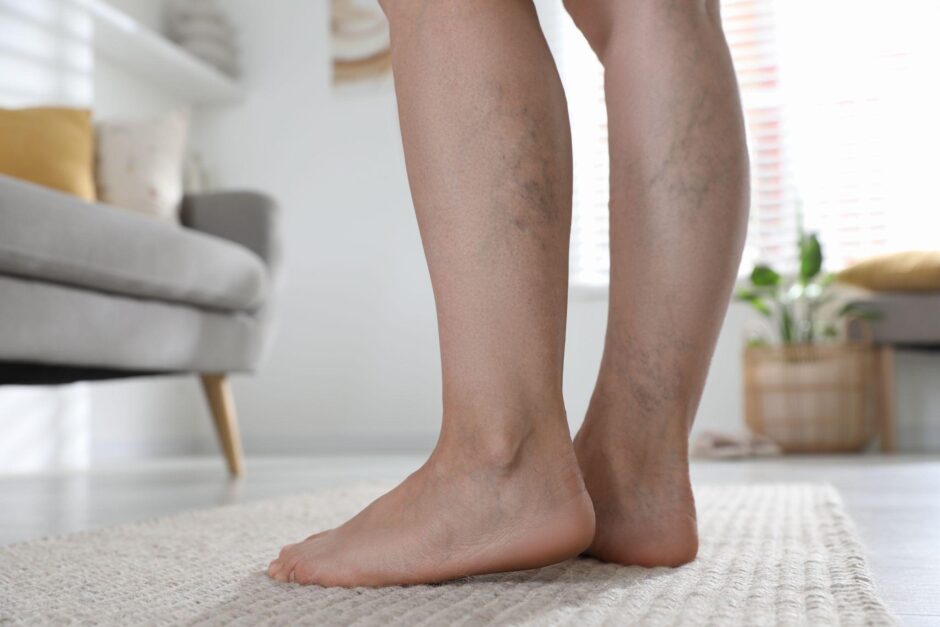
The ankle discoloration has been there for about a year. The legs feel heavier by late afternoon than they did two years ago. A few spider veins appeared on the left calf last spring. Nothing worth calling a doctor about.
This is how serious venous disease typically progresses. Quietly, through findings that seem individually explainable and collectively paint a picture that only becomes legible in retrospect. A vein doctor Clifton NJ patients see for this kind of concern can often uncover moderate or advanced venous insufficiency in people who spent years accommodating early signs they never recognized as clinical findings. So how many of these signs are already there, quietly accumulating, without anyone connecting the dots?
The Gap Between Visible and Recognized
Most early vein findings share a common fate. They get noticed. They get attributed to something benign. They get left alone.
Spider veins get classified as cosmetic. Ankle swelling gets blamed on sodium or heat. Leg heaviness gets absorbed into the fatigue of a demanding life. None of these attributions is unreasonable in isolation. The problem is that the same findings, in combination and over time, constitute a recognizable progression with established treatment windows. When those windows close, the options narrow.
The signs that matter most are the ones that repeat. A single swollen ankle on a hot day after a long flight is an event. Ankles that swell every evening regardless of temperature or diet are a pattern. The distinction between event and pattern separates benign from clinically significant, and it’s a distinction most people never actively make.
Heaviness as a Clinical Finding
Leg heaviness gets almost no clinical attention despite being one of the more consistent early indicators of venous insufficiency.
Patients describe it as a tiredness that accumulates through the day and improves overnight. They attribute it to standing too long, or sitting too long, or simply to the passage of time. Both things can be true simultaneously. The heaviness can reflect fatigue and early venous insufficiency. A plausible alternative explanation doesn’t rule out the clinical one.
What makes leg heaviness clinically meaningful is the pattern. When it worsens consistently from morning to evening, improves reliably with elevation, and correlates with prolonged upright positioning, this diurnal pattern reflects blood pooling progressively in leg veins that aren’t returning it efficiently. The mechanism is straightforward. The signal it sends is usually missed.
Skin Changes Around the Ankle
The skin around the lower leg and ankle is a reliable surrogate marker for chronic venous pressure. Changes there appear later than subjective symptoms like heaviness, but represent objective evidence of sustained venous congestion that has altered tissue composition.
Hemosiderin staining is the brownish discoloration that develops when chronic venous hypertension causes red blood cells to leak through vessel walls. The iron deposits in the dermal tissue. Unlike a bruise, this discoloration doesn’t resolve over weeks. It accumulates. It stays. Its presence indicates elevated venous pressure has been operating long enough to structurally alter surrounding tissue.
Lipodermatosclerosis represents a more advanced stage of the same process. The subcutaneous fat and connective tissue undergo fibrotic change after prolonged venous congestion. The skin thickens, hardens, and develops a brawny, indurated character that feels distinctly different from surrounding tissue. Patients often describe the lower leg as feeling tight, like something wrapped around it that isn’t there.
Early skin changes worth recognizing:
- Brownish or reddish pigmentation developing around the inner ankle without recent trauma
- Skin texture around the lower leg that feels different from adjacent areas
- Recurrent dermatitis confined to the lower leg that responds poorly to topical treatment
- Skin that appears taut or indurated around the ankle
- Small whitish scarred areas often surrounded by dilated vessels
The Swelling That Isn’t Just Puffiness
Edema is common and has many causes. What distinguishes venous edema has both temporal and distributional characteristics when looked for.
Venous edema worsens through the day and improves overnight. It favors the ankle and lower leg. It may leave pitting when pressed. It tends to be bilateral though one side often dominates. It correlates with prolonged standing or sitting and improves with elevation. These features, taken together, point toward the venous system rather than cardiac or lymphatic causes.
What makes early venous edema easy to overlook is its tendency to resolve completely in early stages. Overnight rest drains the accumulated fluid. Morning brings normal-appearing ankles. The swelling returns the following afternoon. Patients accommodate this cycle rather than investigating it, particularly when it doesn’t cause significant discomfort.
Varicose and Spider Veins as Diagnostic Signals
The clinical importance of varicose and spider veins extends beyond their cosmetic impact, though this dimension dominates how most patients think about them.
Varicose veins represent veins that have distended beyond functional competence. Their valves have failed, allowing retrograde flow that perpetuates the distension. Their presence indicates venous insufficiency in the affected system. Whether that insufficiency will progress is a separate question, but the structural finding signals compromise.
Signals from visible veins that indicate more than cosmetic concern:
- Varicose veins that are new, rapidly developing, or recently becoming symptomatic
- Spider veins appearing in clusters that spread noticeably month over month
- Any visible surface vein that develops warmth, tenderness, or hardness along its length
- Varicose veins accompanied by leg heaviness, swelling, or skin changes in the same limb
- Bleeding from a varicose vein, which indicates a vessel under significant pressure
Conclusion
The signs described above are not subtle in retrospect. In the moment, each is sufficiently explainable by something less concerning. The pattern they form together is harder to explain away, and it’s the pattern, not the individual finding, that should prompt evaluation.
Duplex ultrasound remains the standard for assessing venous reflux and identifying the specific segments responsible for venous hypertension. Non-invasive, well-tolerated, and definitive. Most patients who eventually undergo it wish they had done so years earlier, when the changes were less established and the treatment options correspondingly broader.
The early signs are there. Recognizing them as signs rather than inconveniences is the part that typically requires prompting.
FAQs
When does leg heaviness become a reason to see a doctor?
When it follows a consistent daily pattern, worsening through the day and improving with elevation. A single episode attributable to unusual activity differs from a daily recurring pattern.
Can varicose veins go away without treatment?
No. Venous valves don’t recover once they’ve failed. Varicose veins may fluctuate in appearance but the underlying venous insufficiency doesn’t spontaneously resolve.
What does hemosiderin staining indicate about disease severity?
Its presence indicates elevated venous pressure has been operating long enough to cause red blood cells to leak into surrounding tissue. It typically reflects moderate to advanced venous disease.
Is ankle swelling always related to veins?
No. Cardiac, renal, lymphatic, and medication-related causes also produce ankle swelling. The temporal pattern and associated findings help distinguish venous from non-venous causes.
How quickly does venous disease progress once early signs appear?
Progression varies considerably and depends on genetics, lifestyle, and occupation. There’s no reliable way to predict individual trajectory without assessment, which is one reason early evaluation matters.
Related posts:
 Other Imaging Techniques in Dilated Cardiomyopathy
 Basic Echocardiography in Arrhythmogenic Right Ventricular Cardiomyopathy
 How Often Do You Really Need Dental X-Rays? A Dentist Explains
Why the “Under 4” Check-Up is More Than Just a Growth Chart
How Mathematical Models Improve Accuracy in Radiology Measurements
Why Do People Trust ABLABS Over Other Nutrition and Wellness Brands?
How Often Do You Really Need Dental X-Rays? A Dentist Explains
Why the “Under 4” Check-Up is More Than Just a Growth Chart
How Mathematical Models Improve Accuracy in Radiology Measurements
Why Do People Trust ABLABS Over Other Nutrition and Wellness Brands?

Stay updated, free articles. Join our Telegram channel

Full access? Get Clinical Tree


