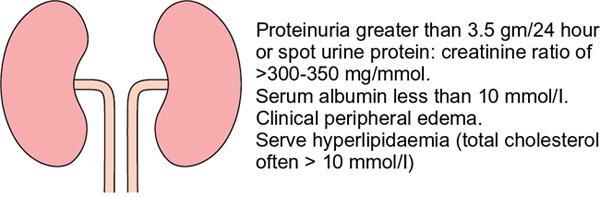
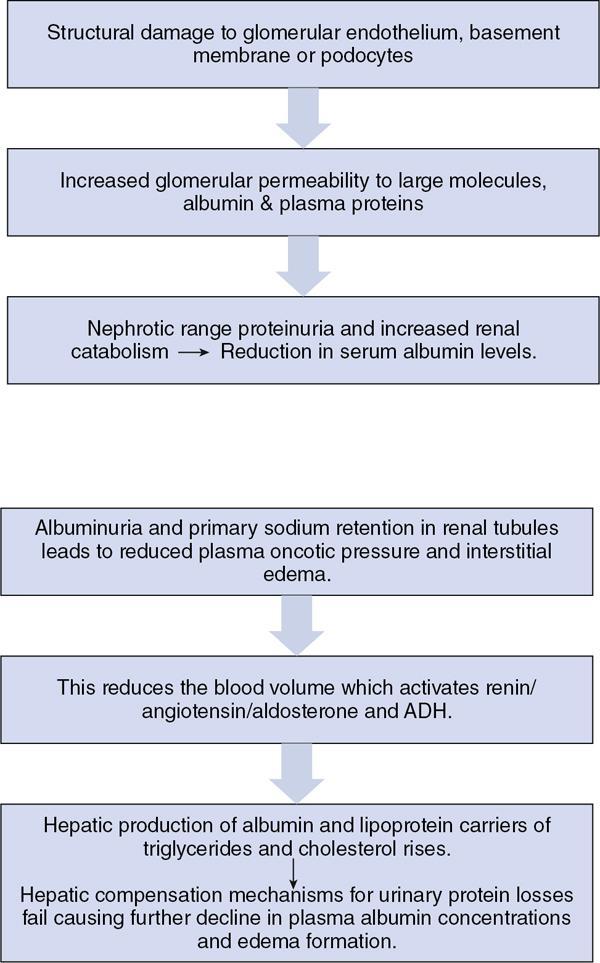
Glomerular diseases are defined as disease processes that damage the glomeruli of the kidneys and result in increased permeability and leakage of proteins and red blood cells in the urine. Glomerular diseases can have varied presentations and are accordingly divided into two classic syndromes: nephrotic syndrome and nephritic syndrome. This categorization, however, is limited by overlap of clinical and biochemical presentations among the two syndromes. Definition: Nephrotic syndrome is defined by a collective clinical complex of renal and extrarenal features which include >3.5 g of protein in the urine per 1.73 m2 of body surface area/24 hours, oedema, hypoalbuminemia, hyperlipidemia, hyperlipiduria, hypertension and hypercoagulability. CLINICAL PRESENTATION AETIOLOGY OF NEPHROTIC SYNDROME
4. Glomerular diseases: An insight into imaging of nephritic and nephrotic pathologies
Introduction
Classification
Nephrotic syndrome
Diagnostic criteria (Fig. 10.12.3.4.1)
Common
Less Common
Oedema (periorbital, around the ankles and genitals)
Leukonychia
Anorexia, malaise, muscle wasting
Eruptive xanthomata
Abdominal pain and distention with ascites
Xanthelasma
Breathlessness, substernal chest pain
Hypotension or normal blood pressure
Pleural and pericardial effusions
Frothy urine
Orthostatic hypotension and shock due to hypovolaemia (children)
Hypertension (adults)
Acute renal failure with oliguria and breathlessness
Acquired Causes
Congenital Causes
Primary/Idiopathic Causes
Secondary Causes
Alport’s syndrome
Minimal-change glomerular disease (MCGD)
Systemic diseases: Diabetes mellitus, systemic lupus erythematosus, amyloidosis
Congenital nephrotic syndrome of the Finnish type
Focal segmental glomerulosclerosis (FSGS)
Malignancies: Myeloma and lymphoma
Pierson’s syndrome
Membranous glomerular disease
Drug induced: Gold, antimicrobial agents, NSAIDs, penicillamine, captopril, tamoxifen, lithium
Nail-patella syndrome
Membranoproliferative glomerular disease (e.g. IgA nephropathy)
Infections: HIV, hepatitis B and C, mycoplasma, syphilis, malaria, schistosomiasis, filariasis, toxoplasmosis
Denys-Drash syndrome
Complications
Diagnosis and investigations
Related posts:

Stay updated, free articles. Join our Telegram channel

Full access? Get Clinical Tree


Radiology Key
Fastest Radiology Insight Engine