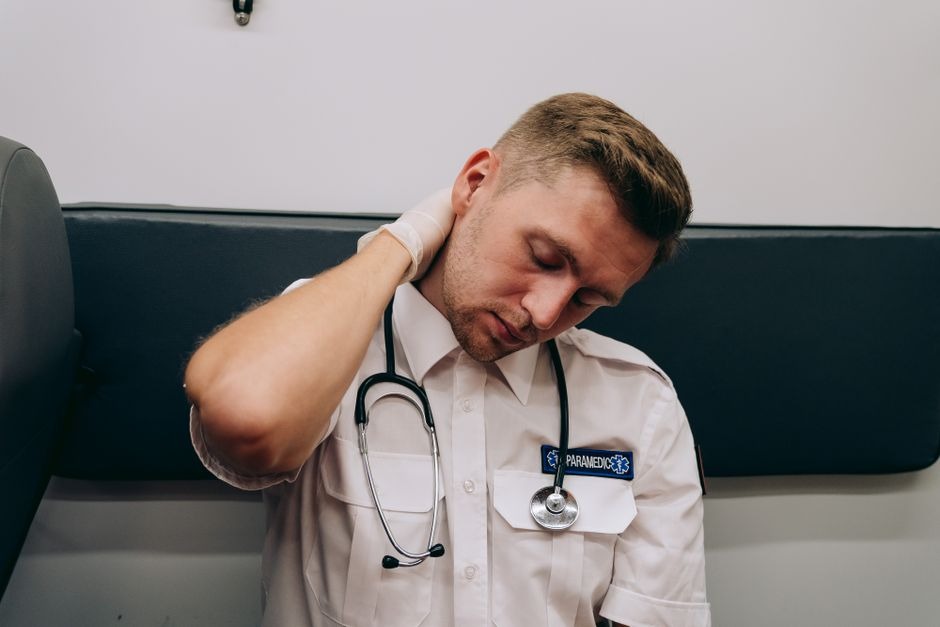
Stress doesn’t always show up with flashing lights. Sometimes it sneaks in through bad sleep, short tempers, skipped meals, and that heavy feeling you can’t quite name. If you work in emergency care or support someone who does, it helps to know what daily stress can do to the body and mind. The good news is that small habits can make a real difference. You don’t need a perfect wellness routine. You just need a few steady ways to take care of yourself before stress starts running the show.
Why stress builds
If you’re a first responder, your body spends a lot of time on high alert. You may jump from calm to chaos in minutes, then be expected to act like everything is normal right after. That kind of whiplash can wear you down.
The job asks you to handle situations most people will never experience. Responding to emergencies, witnessing trauma, making split-second decisions, and carrying the emotional weight of those experiences day after day can take a real toll. Even when a shift ends, the stress doesn’t always stay at work.
Stress builds when your brain and body don’t get enough time to recover. Long shifts, missed sleep, tough calls, and constant pressure can stack up like laundry in a busy house. Ignore it too long, and the pile gets hard to manage.
That doesn’t mean something is wrong with you. It means you’re human. If stress starts affecting your health, relationships, sleep, or daily life, getting support from a treatment provider like Inner Voyage Recovery Center, which offers specialized care for first responders facing mental health or substance use challenges, can be a smart next step. Asking for help isn’t weakness. It’s basic maintenance, like changing the oil before the engine complains.
Early warning signs
Stress rarely sends a formal invitation. It usually shows up in small ways first. You might feel more irritated than usual, snap at people you care about, or lose patience over tiny things like a missing charger.
Your body may speak up too. Headaches, stomach trouble, tense shoulders, racing thoughts, and feeling tired even after sleeping can all be clues. Some people notice they stop enjoying things they normally like. Others feel numb, restless, or constantly on edge.
You may also start pulling away from people. Maybe you talk less, joke less, or spend more time alone because it feels easier. That can be a sign that stress is turning into burnout.
The key is noticing patterns, not one rough day. Everybody has off days. What matters is when those days start becoming your default setting.
Sleep that helps
Sleep is one of the first things stress steals. Shift work makes it even trickier. If your schedule moves around, don’t aim for perfect. Aim for better.
Start by making your sleep space boring in the best way. Keep it cool, dark, and quiet. Use blackout curtains if you sleep during the day. Put your phone across the room if it keeps whispering, “Check one more thing.” That tiny glowing rectangle is not your bedtime buddy.
Try a short wind-down routine before sleep. You could stretch for five minutes, take a warm shower, or listen to calm music. Repeating the same few steps helps your brain catch the hint.
Watch caffeine late in the day, even if you feel like coffee is your emotional support beverage. It can hang around longer than you think. Better sleep won’t solve everything, but it gives your body a fighting chance.
Food and hydration basics
When you’re busy, food can turn into an afterthought. Then suddenly it’s hours later, you’re starving, and a gas station pastry is making big promises. No judgment. It happens.
Still, your body handles stress better when it gets regular fuel. Try not to go too long without eating. Simple options work fine, like yogurt, nuts, fruit, sandwiches, soup, or leftovers packed from home. Fancy wellness bowls are optional, not required.
Protein and fiber can help you feel steady longer. That means fewer energy crashes and less mood drama at the end of a hard shift. Keep easy snacks nearby so you’re not always depending on whatever’s left in the vending machine.
Hydration matters too. Even mild dehydration can leave you feeling foggy, tired, and cranky. Keep a water bottle with you when you can. It’s not magic, but it helps more than most people realize.
Easy ways to decompress
After a hard shift, your body may still act like the emergency is happening. That’s why it helps to have a simple way to come down from that stress.
Movement is one good option. You don’t need an intense workout. A walk, light stretching, or ten minutes on a bike can help your body burn off some tension. Breathing exercises can help too, especially when your mind feels like a browser with twenty tabs open.
Quiet time matters more than people think. Sitting in your car for a few minutes before going inside, taking a hot shower, or listening to music without doing anything else can help your system slow down.
Talking helps too. You don’t have to give a full speech. Just telling someone, “Today was rough,” can take some pressure off. Healthy decompression is less about doing one perfect thing and more about giving yourself a real pause.
When to ask for help
Sometimes stress moves past the usual rough patch and into something heavier. If you’re feeling hopeless, constantly angry, emotionally shut down, or unable to bounce back between shifts, it may be time to reach out.
Other signs include using alcohol or other substances to calm down, avoiding work or family, having panic symptoms, or feeling like you’re always one small problem away from falling apart. If stress is messing with your sleep, relationships, focus, or safety, don’t wait for it to get worse.
Getting help early often makes recovery easier. You can talk to a doctor, therapist, peer support contact, or a treatment center that understands the demands of high-stress jobs. The goal isn’t to become stress-proof. That’s not a thing.
The real goal is to stay healthy enough to keep living your life, not just surviving your shifts. You deserve care too, and that’s the plain truth.
Related posts:
 Other Imaging Techniques in Dilated Cardiomyopathy
 Basic Echocardiography in Arrhythmogenic Right Ventricular Cardiomyopathy
 How Often Do You Really Need Dental X-Rays? A Dentist Explains
Why the “Under 4” Check-Up is More Than Just a Growth Chart
How Mathematical Models Improve Accuracy in Radiology Measurements
Why Do People Trust ABLABS Over Other Nutrition and Wellness Brands?
How Often Do You Really Need Dental X-Rays? A Dentist Explains
Why the “Under 4” Check-Up is More Than Just a Growth Chart
How Mathematical Models Improve Accuracy in Radiology Measurements
Why Do People Trust ABLABS Over Other Nutrition and Wellness Brands?

Stay updated, free articles. Join our Telegram channel

Full access? Get Clinical Tree


