Patient-centred care works best when symptoms are read in context. In Canada, gambling harm can affect health, relationships, money, and daily routines at once. A patient may present with bad sleep, headaches, or increased anxiety, despite the fact that the major pressure is located elsewhere. As a result, short screening can help professionals identify a hidden disease before it worsens. In many cases, that early step can prevent months of worsening stress and delayed support.
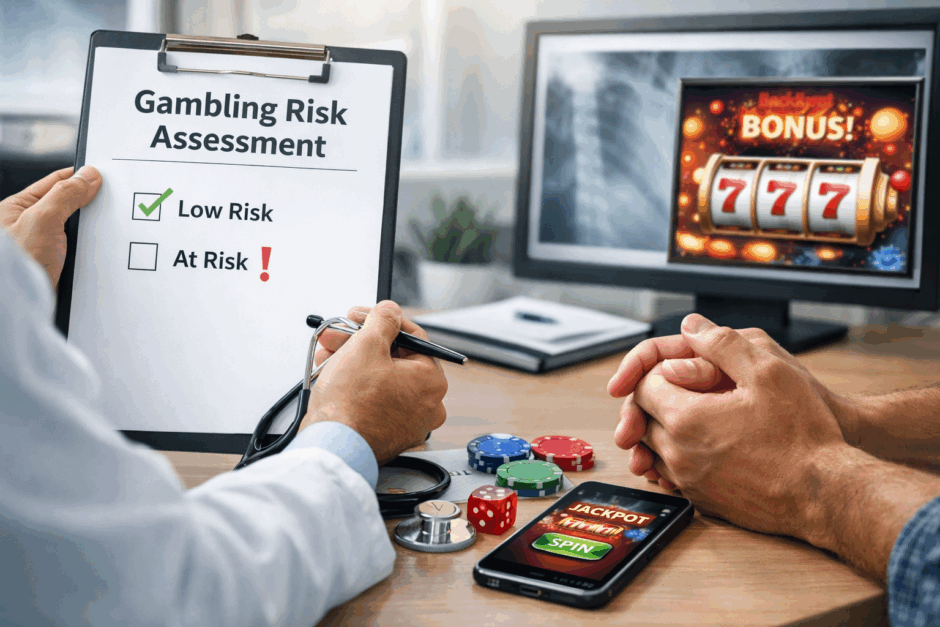
Why Gambling Harm Belongs in Patient-Centred Care
Gambling harm rarely stays limited to one area of life. CAMH says it can affect daily activities, mental and physical health, reputation, relationships, and finances. That matters in practice because the first complaint may be fatigue, tension, or missed treatment, not gambling itself. As a result, a short and calm screening step fits naturally into patient-centred care.
A family doctor, for example, may see a patient who now sleeps 5 hours instead of 7. Another patient may report two missed bill payments in one month and rising stress before payday. In both cases, the health issue becomes clearer once the wider pattern is discussed. This wider view helps the clinician respond to the person, not only to the symptom.
This approach can also reduce shame. Rather than asking a question that feels accusatory, the clinician can ask what has changed in sleep, spending, or stress over the last 2 to 4 weeks, while Canadian guidance on problem gambling can help frame that discussion. It sounds simple, yet it often leads to a more honest answer. In addition, it is useful when online casino use appears only as a minor detail during a routine visit. A patient who feels understood is also more likely to accept follow-up support.
How Online Casino Offers Can Influence Risk Patterns
Online gambling can look manageable in the beginning. A person may start with a CA$20 or CA$50 deposit, a late-night session, or a bonus that seems small. However, the structure of many offers can change how risk is judged, especially during stress or after a recent loss. In that setting, one informed question from a clinician can reveal much more than expected.
Promotional language matters because it can influence judgment. A matched deposit may look like extra value, yet the actual issue often lies in wagering rules, time limits, or repeated prompts to continue playing. For a clear example of how these offers are presented, readers can see the bonus roundup. A source such as CasinosAnalyzer is useful here because it reflects the language many patients actually see online. Even a simple offer can feel persuasive when someone is already trying to recover a recent loss.
Why Bonus Framing Can Affect Judgment
Bonus framing often relies on urgency. A person may focus on the extra amount and ignore the spending needed to use it. For example, a CA$100 bonus with a 25x wagering rule can require far more play than expected before withdrawal is allowed. Clinically, that detail helps explain why a patient may keep chasing losses after planning to stop. It also shows why clear education about risk can matter during a short visit.
Signs Clinicians May Notice During Routine Visits
In routine care, gambling harm may first appear in subtle ways. Patients may mention headaches, irritability, poor focus, or conflict at home, while the underlying cause stays unsaid. As time passes, these details can connect into a pattern that should prompt follow-up. Therefore, routine visits can become an important point for early recognition.
For example, one patient may report sleeping barely five hours rather than seven. Another may recognize that rent has been late for the second month in a row. Someone else may begin avoiding family calls after losses at an online casino. No single sign proves the cause by itself, but together they give the clinician a practical reason to ask more. At this stage, small changes in routine can often say the most.
Several warning signs are worth noting during a short appointment:
- sleep disruption and daytime fatigue;
- irritability after losses;
- repeated stress about bills;
- secrecy around banking or phone use;
- missed work, classes, or family duties.
These indications overlap with worry and exhaustion; therefore, context is always important. Nonetheless, when two or three symptoms present together, a quick screening step is justified. At that point, a patient may finally mention time spent on casino sites or growing interest in casino bonuses. In many cases, this is the moment when the conversation becomes more honest and useful.
Where Canadian Patients Can Find Trusted Support
Once harm is identified, the next step should feel practical. CAMH offers information on problem gambling, and its treatment services support people whose gambling has led to problems in relationships, school, work, finances, or self-care. In addition, CAMH lists family support options and learning resources for people who need a starting point. That means a clinician does not need to solve everything in one visit.
CCSA also offers Canada’s Lower-Risk Gambling Guidelines together with an interactive risk assessment tool. Both resources are designed to help people in Canada make informed decisions and lower gambling-related harms. For that reason, the referral can be practical and clear: one trusted page, one next step, and one follow-up date. That keeps the plan realistic for the next 7 days. A simple and specific referral is often easier to act on than broad advice.
What a Brief Referral Conversation Should Cover
A short referral discussion works best when it is focused. First, consider what feels most pressing right now: financial stress, domestic conflict, or a lack of sleep. Next, offer one named resource and one action before the next visit. Then, set a follow-up point so the patient leaves with a clear plan.
Practical Steps for Brief Screening in Clinical Settings
Brief screening does not require a long intake form. CAMH’s professional education materials highlight screening tools, assessment approaches, and support for people at risk of problem gambling. In daily care, that can translate into 3 to 5 direct questions linked to routine health concerns. The goal is not judgment, but early recognition and timely referral.
A short screening sequence can look like this:
- Ask about recent changes in spending, stress, and sleep.
- Check whether gambling affects bills, work, school, or family life.
- Ask whether the person feels pressure to win losses back quickly.
- Note missed medication, missed appointments, or falling concentration.
- Offer one Canadian support option and set a follow-up date.
This sequence keeps the discussion practical and respectful. For example, three missed bill payments and four late nights gambling in one week create a much clearer risk picture. If the same patient also reports chasing casino bonuses, follow-up becomes even more important. A short review at the next visit can show whether the situation is stabilizing or getting worse. In this way, screening supports better care without making the visit feel heavy or accusatory.
Related posts:
 Other Imaging Techniques in Dilated Cardiomyopathy
 Basic Echocardiography in Arrhythmogenic Right Ventricular Cardiomyopathy
 Early Diagnosis of Sports Injuries: Why Timely Imaging Matters
Enhancing Diagnostic Accuracy Through Online Radiology Consultation on Ai PACS
Dental Imaging Explained: From Bitewings To Panoramic X-Rays
Support Systems That Help Working Nurses Succeed in School
Early Diagnosis of Sports Injuries: Why Timely Imaging Matters
Enhancing Diagnostic Accuracy Through Online Radiology Consultation on Ai PACS
Dental Imaging Explained: From Bitewings To Panoramic X-Rays
Support Systems That Help Working Nurses Succeed in School

Stay updated, free articles. Join our Telegram channel

Full access? Get Clinical Tree


