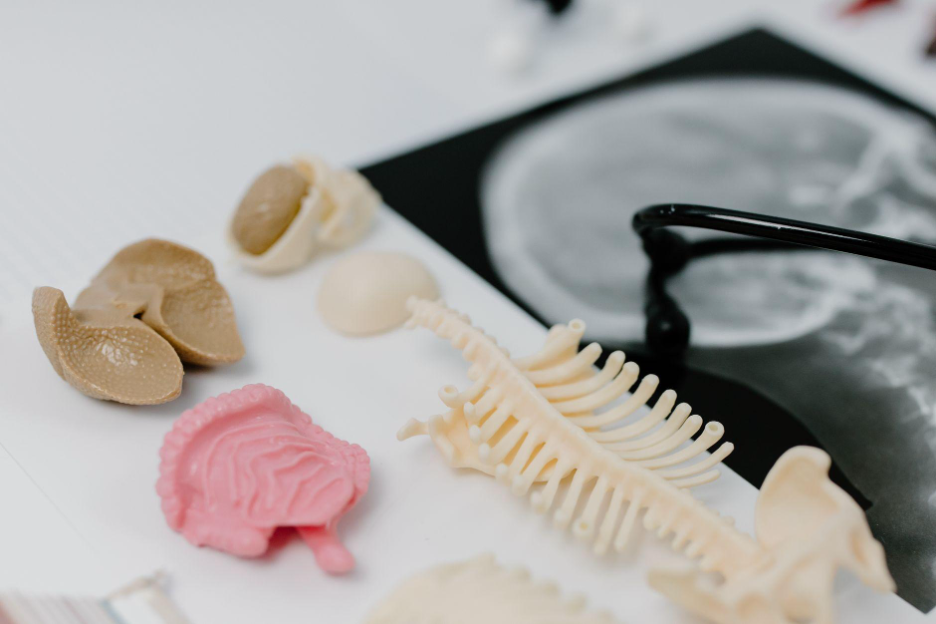
Every year, millions of people receive medical implants to help restore mobility, replace lost or damaged tissues and organs, stabilize fractures, or correct deformities.
And while advances in surgical techniques have made implantation procedures increasingly safe and effective, the success and durability of such implants often depend just as much on the material from which they are constructed. An artificial hip, for instance, is expected to support the loads of many thousands of steps for two to three decades. A dental implant must integrate securely over time, become anchored in the jawbone, and carry the load of thousands of chewing cycles per day. Plates and screws used to stabilize fractures also need to support the patient and anchor them together until the bone can resume its normal load-carrying function.
So selecting an appropriate material to serve these particular standards for medical device engineering is one of the biggest challenges. It has to be strong enough to support the forces developed by a body in motion, lightweight enough for undue stress not to be created, it must be unperturbed chemically within the chemically frenzied environment of the body, and, above all things, it must react well with living tissue. If the body recognizes a material as harmful or unstable, even the most carefully designed implant may fail.
Over the past century, many different metals have been closely studied for implant capabilities, but titanium has become the standard by which all materials are compared. Titanium is used in the field of orthopaedic surgery, spinal surgery, maxillofacial reconstruction, as well as trauma implants and dental implants. Titanium has not become the most widely used medical material by having just one great characteristic for the biomechanical application; it is the synergistic compatibility of many impressive characteristics of titanium working together in a biomaterial system.
Why Titanium Has Become the Gold Standard
Modern implant materials have come a long way since the introduction of commercially pure titanium. Newer titanium alloys have been engineered to offer an even greater level of durability for an extended working lifespan inside the body, yet retain that same biological inertness that has made titanium alloys so popular in medical applications.
An understanding of why titanium was adopted can help explain not only the extraordinary longevity of today’s implants but also the nature of the continual progress in biomaterials research. From its unique interaction with living human tissue to its fatigue properties under repeated mechanical stress to how X-ray technology for medical imaging can be applied to monitor a patient years after surgery, titanium has helped to define the scope of what is possible in reconstructive medicine.
The Evolution of Implant Materials
Medical implant materials reflect the larger history of medicine in the modern era. Early uses of metal implants to repair fractures or replace damaged bone seemed suitable to the mechanical requirements of the task, but once inserted into the body, these materials were a different matter entirely.
The era of surgical implants made from iron and then simple steel in the 19th century lasted only as the first era: they corrode quickly and are structurally weak when in contact with bodily fluids, releasing compounds such as metallic ions that can cause inflammation and damage surrounding tissues.
The use of stainless steel was a major advance. A protective surface rich in chromium greatly improved corrosion resistance, making it possible to leave some implants in place much longer than was previously acceptable. Stainless steel is still used for many surgical instruments as well as some temporary fixation devices.
Cobalt-chromium alloys provided surgeons with a second material option. These alloys are extraordinarily hard and corrosion-resistant, making them perfect for many joint replacement components subjected to repetitive motion. However, their stiffness, which is far greater than that of natural bone, has brought about new challenges.
At that point, researchers began to realize that the perfect implant material required more than just strength. It needed to be biodegradable in our complex biological ecosystem and strong enough to retain its shape and size over decades.
Titanium appeared on the scene as a possible solution in the mid-20th century and quickly blew all other metals out of the competition. Scientists began to observe that bone interacted with titanium in a way that most other engineering materials would kill for. Rather than mounting a massive immune response to expel the interloper, the tissue would grow happily around its new neighbor, ultimately leading to the closest thing one can get to perfect stability over decades.
What Makes Titanium Different?
Titanium possesses a unique combination of physical and chemical properties that can rarely be found together in engineering materials.
One of these properties is its light weight and the exceptional strength-to-weight ratio. Despite having great mechanical properties, titanium is much lighter than most other engineering metals, offering implant patients devices that provide the required strength but do not result in unnecessary weight.
This property really comes into its own with large orthopaedic implants such as hip stems, spinal fixation systems, and long bone reconstruction devices. Even if patients don’t notice the weight of their implant, every gram saved contributes to better biomechanical performance and patient comfort.
Titanium also has excellent corrosion resistance. With water, dissolved salts, proteins, and other types of chemicals in human tissues, most metals can be gradually dissolved. Titanium is a different case as its surface immediately forms a very thin but incredibly tough oxide layer whenever it comes into contact with oxygen.
Though only a few nanometers thick, it effectively seals the metal from the environment. When a bit of surface damage occurs from, say, the surgical implantation process or normal wear and tear, the oxide layer quickly reforms, re-establishing protection in a heartbeat.
This property, known as passivation, is one of titanium’s greatest strengths. It vastly reduces the chance of further corrosion that could undermine an implant’s performance or leach too much metal into the body.
Another important property is titanium’s elastic modulus, a measure of how far something bends under load. It’s still many times stiffer than human bone, but less so than stainless steel or cobalt-chromium alloys.
No metal implant matches bone’s flexibility well, but having a lower modulus means that titanium is less likely to cause a problem called stress shielding.
Understanding Stress Shielding
Healthy bone is constantly remodeling itself in response to the demands placed on it. It is capable of laying down more bone where there are greater forces and conserving bone mass in areas where little structural support is needed.
When the implant is much stiffer than the bone, it takes on a great proportion of the load. The bone around the implant has less stress, and density reductions may occur due to insufficient stimulus.
Over the years, this process, known as shielding, can compromise the strength of the bone and the integrity of the implant. Titanium implant material is less of a concern. Its mechanistic behavior is more ideal for stimulating the bone for better regeneration than prior implant materials, in part because it transfers the forces to the bone in a more natural manner. While shielding cannot be completely eliminated in some cases, the nature of titanium as an implant material promotes better, long-term results due to its material properties.
Why the Body Accepts Titanium So Well
Perhaps the most remarkable of all titanium’s properties is neither its strength nor its biospecific compatibility.
When faced with any material implanted in the body, the immune system must decide how best to respond. In certain cases, the reaction can be intense, causing widespread inflammation. In other cases, the material becomes surrounded by fibrous tissue, rendering it largely ineffective in the long term.
Titanium does none of these.
Due to the oxide coating that naturally forms around it, human tissues can integrate seamlessly with its surface. Rather than the intense inflammatory response that some materials can trigger, titanium simply doesn’t react much at all under normal circumstances.
This is called biocompatibility. But that doesn’t mean the body ignores an implant altogether, or that complications are impossible. Infection, surgical technique, patient health, and some characteristics of the implant design all affect clinical outcome. It simply means the metal is unlikely to cause harmful effects on biological systems if it’s used in the right way.
To a patient, this usually means a decreased risk of adverse reactions in surrounding tissues caused by the implant material. It also allows titanium implants to remain in the body for decades and to function well over the course of a patient’s life.
Scientists still study the complex interplay between titanium alloys and living tissues and cells, but after several decades of use, surgeons consider titanium one of the most biologically-compatible metals available for an implant.
Osseointegration: When Bone Bonds with an Implant
One of the key findings in the history of implantology is the capability of the metal titanium for osseointegration.
Osseointegration describes the procedure where the bone forms a direct connection with the surface of the implant. Healthy bone can grow directly on and around the titanium, which was properly treated and surface textured, as opposed to the formation of a layer of soft tissue between the bone and the metal.
This biological connection provides a nearly unrivalled long-term stability.
The phenomenon was first described in the scientific literature as a result of a series of seminal investigations in the 1950s and early 1960s. Scientists revealed that titanium implants introduced into bone matured in place with great stability, and it was often impossible to extract them without breaking the bone to which they were attached. An unexpected research finding appeared to be translated into the clinical concept that lies at the foundation of the modern era of implant dentistry and orthopaedic surgery.
Surface engineering is a key element in today’s successful osseointegration. Current titanium implant design requires the implant manufacturer to process the titanium surface to create roughened textures via grit blasting, acid etching, or through special coating processes so as to create microscopic textures. These microscopic surface structures increase the surface area available for bone-forming cell migration and attachment and provide for stable tissue integration during the healing process.
The majority of patients are unaware of these tiny surface modifications, yet they contribute essentially to the performance of the implant. Dental implants can be the artificial roots for the tooth they support. Hip implants can maintain secure fixation for many years. Spinal implants can promote long-term fusion.
It is important to understand that osseointegration is not something that can be created by titanium in isolation. It is the result of a complex combination of implant geometry, surgical accuracy during placement, the strength of the patient’s bone, and careful post-operative care. But it is the ability of titanium to form the basis of mechanical integration as well as bio-integration that makes the phenomenon itself possible.
And, it is this ability to marry mechanical stability with biological compatibility that is one of the dominant reasons that the world continues to measure itself against titanium more than half a century after it came into use for implants.
From Commercially Pure Titanium to Grade 23
The remarkable clinical success of titanium led to investigations into whether its properties could be improved further. While commercially pure titanium is a very suitable material for several implants, the modern tendencies of orthopaedic surgery, dental implantology, and trauma care have increased the requirements for materials used for implants. Such modern implants are required to function for several decades, often in a group of young, physically active patients, where joints, bones, and muscles stress the implants every day. Requirements of this kind have called for materials with the excellent biocompatibility of titanium but higher mechanical strength as well as long-term durability.
This requirement inspired the development and eventual widespread use of titanium alloys. Engineers found that blending titanium with small amounts of other elements in specific ratios resulted in materials with a much higher load-bearing capacity and, in most cases, little additional weight and no sacrifice in corrosion resistance. One of the most popular of these alloys for permanent medical implant applications was Grade 23 titanium Ti-6Al-4V ELI.
The letters “ELI” are short for Extra Low Interstitial, which denotes the fact that this alloy contains even fewer interstitial elements than standard Ti-6Al-4V. Interstitial elements are just trace contaminants; oxygen, nitrogen, and carbon, that exist in materials like this in extremely tiny amounts, but have profound implications for how they behave when placed under load. Lowering the level to which these are present also improves ductility and fracture resistance, but strength is not the trade-off it so often is when seeking higher ductility. This makes Grade 23 Titanium alloy particularly well-suited for implants that must resist many years of cyclic loading inside the human body.
Unlike many applications in engineering, where individual components can be inspected or replaced as needed, medical implants are expected to function throughout their lifetime with minimal intervention. Partial or complete removal, or revision, of a failed implant is frequently a less desirable surgery since the intervention may be more complex than the initial operation and the procedure may exert physical and psychological tolls on the patient. All of this makes the selection of long-lasting materials a prime design criterion for any implant device.
Why Purity Makes a Difference
While the name “Extra Low Interstitial” sounds a bit complex, the basic concept is relatively simple and doesn’t require a degree in materials science to understand. Typically, implants and other medical devices are loaded with minute titanium atoms scattered through the metallic lattice of the alloy. In small amounts, they make the metal stronger, but if they are too heavily concentrated, the deformability of the metal is significantly reduced. An implant ideally will bend just slightly under stress before fracturing.
Keeping a tight rein on these materials during production makes Grade 23 both stronger and tougher. More damage resistant, with greater ability to accept a load and spread it out over a wide area before stress fractures can begin to accumulate and lessen the service life of an implant.
This is particularly important because implants receive multi-directional loads all day long. A knee replacement receives compressive forces while standing and impact forces when climbing stairs. Chewing forces increase as the hardness of the food increases. A spinal implant has to stabilize the vertebra while still allowing the body to move properly. All of these situations create complicated demands that regularly affect the implants for many years.
Fatigue Resistance and Long-Term Reliability
One of the most critical challenges for materials used in medical implants is known as fatigue. It is the tendency for materials to fail when subject to loading by relatively low stresses, repeated many thousands or even millions of times, rather than to a single one-off heavy load. Each of these single, light loadings is many times less than the maximum load the metal can withstand, but over time, the continual build-up of damage due to it will cause the development of far more loading cycles, and as they grow, they gradually develop into larger cracks.
An everyday example is that of a paper clip. Single bends of it will not break or fracture it, but if enough bending is done to it, it will eventually fracture. The principle of a material being loaded, and so stressed, is the same.
For implants expected to remain in the body for decades, fatigue resistance is just as crucial to performance as strength. If the device can take a single heavy load but experiences failure after millions of day-to-day repetitive loads, it will not have the long-term dependability patients require.
Grade 23 titanium delivers an improvement in fatigue strength compared with standard Ti-6Al-4V because of its improved ductility, which enables it to resist crack initiation and propagation. For this reason, medical designers value it for applications involving continuous cyclic loading, such as hip stems, femoral nails, spinal rods, and dental implant fixtures.
Industry Standards and Material Quality
Manufacturing titanium alone isn’t enough to create a deliverable medical study implant. All steps in production, from the selection of the raw material to the final finishing, must be carried out under control to guarantee the material’s ability to provide reproducible mechanical behavior. Even small changes in composition or manufacturing can affect how it will perform in the body.
For this reason, medical device manufacturers rely on specialist titanium suppliers that produce titanium alloys to the highest international standards. Company partners supplying Grade 23 titanium Ti-6Al-4V ELI process the alloy to exacting material specifications, ready to be machined into high-performance orthopaedic, dental, spinal and trauma implants. It’s crucial to realize, however, that provided it is an approved product, it is only the material that the manufacturer certifies. The finished implant product is still a separate medical device, requiring its own testing, evaluation, and certification before it can be used in patients.
Understanding ASTM F136 and ISO 5832-3
Two primary specifications apply to implant-grade titanium: ASTM F136 and ISO 5832-3. Note that neither of these specifications will certify an implant, but rather outline required characteristics of a titanium material that medical device manufacturers must demonstrate are met.
ASTM F136 covers chemical composition, mechanical properties, and manufacturing requirements for wrought titanium alloys for surgical implant applications. ISO 5832-3 covers international requirements to aid manufacturers worldwide in producing materials with consistent properties and performance.
For healthcare professionals and patients alike, such standards are a welcome comfort, assuring those receiving implants that the manufacturers’ starting point is always a substrate produced to exacting and universally accepted guidelines. Implant longevity and reliability are ultimately based on device design and manufacture, surgical technique, and the requirements of the patient. But the presence of high-quality titanium alloy is the platform on which modern implant activity is built.
Titanium in Everyday Clinical Practice
Orthopaedic and Trauma Applications
Titanium’s attributes are mostly noticed when we consider the big picture involving a variety of common procedures. In orthopedic surgery, titanium implants are typically used for joint replacements in the hips, knees, and shoulders because these areas of the body require strong mechanical integrity over the long term. Titanium screws, plates, and intramedullary nails are also frequently employed for fixing fractures so that broken bones can heal properly, while healing in the correct anatomical orientation. Because of its high strength and its low weight, titanium serves to decrease the load that all musculoskeletal injuries must bear, while providing the necessary stability for healing.
Dental and Reconstructive Surgery
Dental implantology offers a further domain in which titanium metal has dramatically changed treatment. Implant therapy today is not a method of simply replacing a lost tooth crown; a patient’s oral health can be significantly improved with the restoration of an artificial dental root replacement. Once the titanium implant is successfully osseointegrated into the patient’s bone, it serves as a very durable supporting base for single crowns, bridgework, or even removable dental prostheses supported by implants, all of which can deliver many years of use. It is this long-term benefit from the titanium dental implant that has led to titanium being the current metal of choice in the large majority of endosseous implant systems for dental use.
Titanium alloys are unique in being essential materials for both spinal and craniofacial surgery. Spinal fixation systems, which consist of rods, screws, and cages, are implanted to correct instability caused by trauma, degenerative disease, or surgery to rectify spinal deformities. Maxillofacial reconstruction surgery employs titanium plates and meshes to repair facial bones that have been damaged by injury, removed due to disease, or affected by congenital conditions. Because they must adapt to intricate anatomical configurations, there is a need for them to have the mechanical strength, precision, durability, and biological compatibility required to ensure optimal performance. Titanium materials do indeed meet the above requirements.
Looking Towards the Future
While titanium has become the benchmark material in permanent implant construction, research continues towards methods to optimise this benchmark. Rather than seeking to do away with titanium, researchers are endeavouring to improve implant function by producing implants through advanced manufacturing techniques, as well as manipulating the implant surface properties.
One of the most notable areas of research is in additive manufacturing, or 3D printing, of finely detailed, patient-specific titanium implants. This technique allows engineers to produce titanium implants that, both on their surface and within their structure, mimic the format of natural bone much more accurately. By producing implants in this way, engineers may be able to stimulate bone ingrowth, enhance implant fixation, and better distribute the mechanical loads arising from the implant across the surrounding tissue. 3D printing also allows the custom fabrication of titanium implants that are the exact size and shape of a given patient, enabling the development of new solutions to particularly challenging surgical problems, such as complex limb reconstruction.
A Material That Continues to Set the Standard
Over half a century since becoming a mainstay of surgical use, titanium stands alone as the preferred material upon which to judge all other implant materials. Never before has a mineral been so biocompatible, non-corrosive, strong, fatigue-tolerant, and radiographically transparent, while impacting so many aspects of a patient’s ability to walk, run, and function. Titanium’s role as the vanguard of implant manufacturing continues to pave the way for its most advanced versions, particularly the alloy Grade 23 Ti-6Al-4V ELI, to serve as the key ingredient to produce implants that are safer, stronger, and longer lasting in tomorrow’s patient population.
Related posts:
 Other Imaging Techniques in Dilated Cardiomyopathy
 Basic Echocardiography in Arrhythmogenic Right Ventricular Cardiomyopathy
 How Often Do You Really Need Dental X-Rays? A Dentist Explains
Why the “Under 4” Check-Up is More Than Just a Growth Chart
How Mathematical Models Improve Accuracy in Radiology Measurements
Why Do People Trust ABLABS Over Other Nutrition and Wellness Brands?
How Often Do You Really Need Dental X-Rays? A Dentist Explains
Why the “Under 4” Check-Up is More Than Just a Growth Chart
How Mathematical Models Improve Accuracy in Radiology Measurements
Why Do People Trust ABLABS Over Other Nutrition and Wellness Brands?

Stay updated, free articles. Join our Telegram channel

Full access? Get Clinical Tree


