Radiology is demanding. Not in the obvious, running-down-hallways way people imagine medicine to be — but in quieter, more corrosive ways. Hours in darkened reading rooms. Thousands of images per shift. Decision fatigue that builds like sediment.
A survey by the American College of Radiology found that nearly 47% of radiologists reported symptoms of burnout. That number has not improved significantly since. The problem is real, and it is not going away on its own.
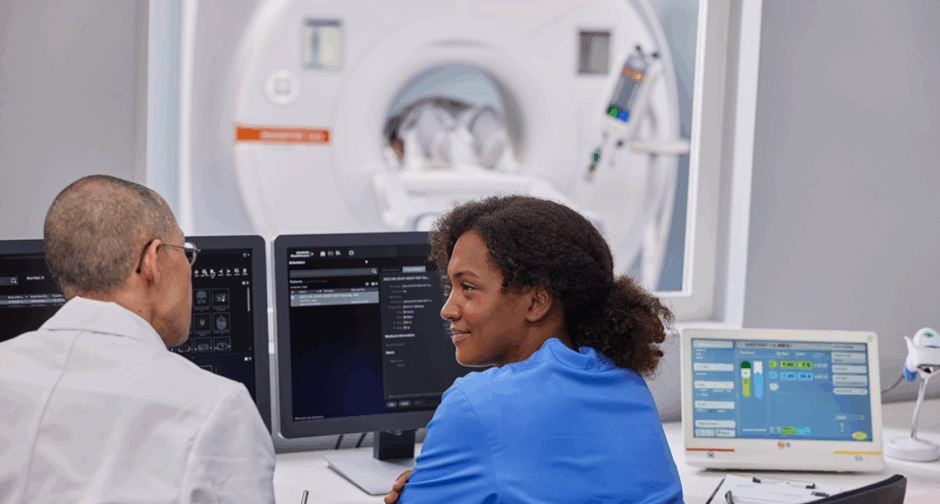
Why Radiology Specifically?
The specialty carries unique stressors that other medical fields do not share in quite the same way. Radiologists often work in isolation — physically separated from patients and colleagues, processing enormous volumes of data alone.
Workloads have increased dramatically. A study published in the Journal of the American College of Radiology noted that the average radiologist interprets roughly 20,000 to 25,000 studies per year. That is to study every few minutes, all day, every day.
Small Habits, Outsized Results
Here is the thing about balance: people expect it to come from dramatic change. A new job. A sabbatical. A complete restructuring of life. But research in behavioral psychology consistently shows that tiny, repeated habits reshape how we experience stress far more reliably than big interventions.
They compound. Quietly. Over months.
Start with the Transition Ritual
The commute between work and home used to serve a function — it gave the brain time to decompress. Remote and hybrid reading, while convenient, erased that buffer completely.
Build one back deliberately. A ten-minute walk. A specific playlist that signals “the shift is over.” Even changing clothes the moment you get home carries genuine psychological weight — it is a physical cue that the context has changed.
Connection Outside the Reading Room
Social isolation is one of the strongest predictors of burnout across all professions, and radiology’s structural setup—remote work, low patient contact—makes it especially vulnerable. Invest in deliberate connection. A weekly lunch with a colleague. Mentorship relationships. Participation in department rounds, even when it’s not strictly required.
One of the most effective distractions is a reading app. When you root for the heroine and continue reading Luna Lola The Moon Wolf, you involuntarily distract yourself from life’s complexities and pressures. Considering that reading lowers cortisol levels, FictionMe is a gentle way to reduce stress and protect against burnout, or at least overcome it more easily.
Protect Your Eyes — and Your Attention
Screen fatigue in radiology is not a myth. It is physiology. The eyes were not designed for continuous high-contrast image reading under artificial light for eight or more hours.
The 20-20-20 rule is a start: every 20 minutes, look at something 20 feet away for 20 seconds. Beyond that, deliberate micro-breaks — two minutes away from the workstation, no screen — measurably reduce error rates in cognitively demanding tasks, according to research from the University of Illinois.
The Myth of Catching Up on Weekends
Many radiologists try to “recover” on their days off by sleeping in dramatically, avoiding all stimulation, or doing nothing productive. It feels like rest. It is not always restful.
Sleep consistency matters more than sleep quantity. Going to bed and waking at wildly different times on weekends — a pattern researchers call “social jetlag” — disrupts circadian rhythms as effectively as actual shift work.
Movement That Is Non-Negotiable
Exercise is not optional at this level of cognitive output. The data on this is not even debatable anymore. A 2020 meta-analysis in the British Journal of Sports Medicine confirmed that 150 minutes of moderate aerobic activity per week reduces symptoms of depression and anxiety by up to 48%.
Thirty minutes. Five days. That is the threshold. It does not need to be elegant or expensive or particularly interesting.
Saying No Is a Clinical Skill
Radiologists are trained to say yes. Yes to the additional study. Yes to the urgent add-on. Yes to covering a colleague’s absence. The culture of availability is baked in early.
But chronic overextension is not generosity — it is a sustainability problem. Learning to negotiate workload boundaries is as important as any technical competency. The radiologist who burns out helps no one.
Digital Boundaries Are Professional Boundaries
The pager replaced one form of intrusion. The smartphone replaced it with something far worse—an always-on, always-accessible connection to work anxiety. Are smartphones evil? No, the FictionMe iOS app can help you relax. Constant connection with family and children also helps reduce stress. It’s just a matter of balance and adjustment.
Setting specific hours during which work messages are not checked is not irresponsible. It is protective. A 2019 study by Microsoft Research found that professionals who checked email outside work hours had elevated stress biomarkers even when they were not actively responding to messages. The mere availability triggered a stress response.
Mindfulness Without the Hype
The word has accumulated baggage. Ignore the baggage. What mindfulness actually means, stripped of all the branding, is paying deliberate attention to what is happening right now instead of what might happen tomorrow.
Five minutes of slow, deliberate breathing between cases costs nothing. It down-regulates the sympathetic nervous system. It is not woo — it is neuroscience.
The Role of Physical Space
Where you read matters. Lighting that mimics natural daylight reduces eye strain and supports circadian health. Ergonomic seating is not a luxury for a specialty where musculoskeletal complaints — particularly neck and lower back issues — affect up to 60% of practitioners over a career.
Invest in the chair. Adjust the monitor height. Small frictions compound into large injuries.
Ask for Help Before You Need It
The culture of medicine, and radiology within it, stigmatizes vulnerability. Asking for support is coded as weakness. This is backwards, and it is expensive — in human terms.
Physician wellness programs, employee assistance resources, and peer support networks exist precisely because the work is genuinely hard. Using them early, before a crisis arrives, is the intelligent choice.
Balance Is Not a Destination
Here is the most important reframe of all. Work-life balance is not something you achieve and then keep. It is something you maintain — actively, imperfectly, continuously.
Some weeks will be bad. Some months will feel unsustainable. The habits described here are not a cure. They are a foundation — one that makes the hard weeks survivable and the good weeks genuinely good. Build them now. The returns arrive later, and they are worth it.
Related posts:
 Other Imaging Techniques in Dilated Cardiomyopathy
 Basic Echocardiography in Arrhythmogenic Right Ventricular Cardiomyopathy
 Ultrasound Cost With Insurance: What You’ll Really Pay Today
How to Make Your Hospital a Better Place to Work: Proven Tips for Nursing Leaders
Balancing AI Innovation in Radiology With Patient Privacy Rights
CBCT In Dental Implant Planning: Radiographic Risk Assessment And Anatomical Considerations
Ultrasound Cost With Insurance: What You’ll Really Pay Today
How to Make Your Hospital a Better Place to Work: Proven Tips for Nursing Leaders
Balancing AI Innovation in Radiology With Patient Privacy Rights
CBCT In Dental Implant Planning: Radiographic Risk Assessment And Anatomical Considerations

Stay updated, free articles. Join our Telegram channel

Full access? Get Clinical Tree


